April
April 28, 2026
New “product manufacturer” dimension in e-commerce reports and API
You can now record and analyze manufacturer information for your e-commerce reports.
That is new:
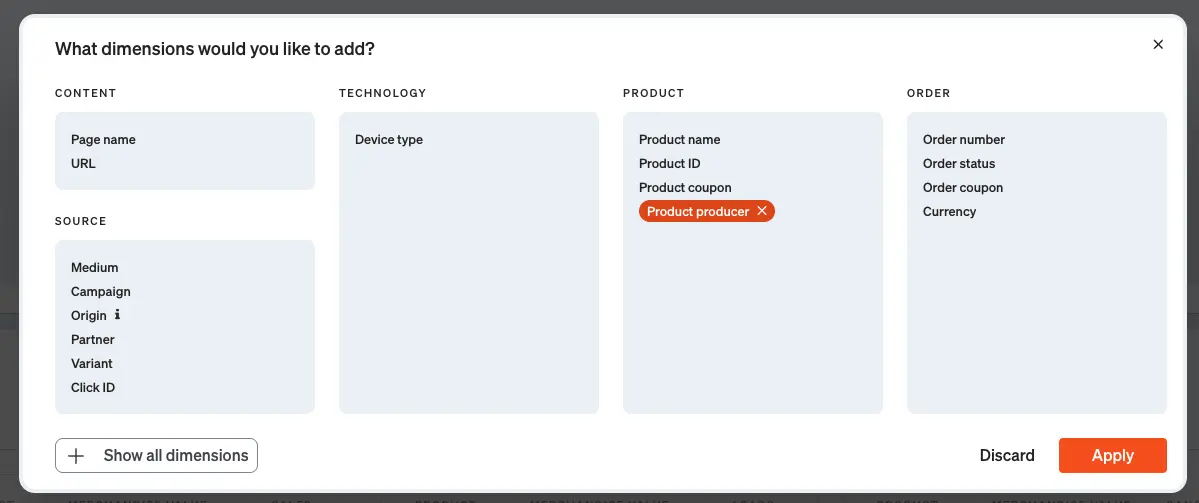
- New dimension: The “Product manufacturer” dimension has been added. You can find it in the “Product” group.
- Report integration: The dimension is available in all reports that also contain the “product name”
- API extension: You can use the e-commerce API to transfer the manufacturer or supplier name in the product object using the parameter
pro_name.
Technical details:
- Parameters:
pro_name - Contents: Name of the manufacturer/supplier
- Character limit: Maximum 100 characters
Documentation: You can find the details of the integration in the updated documentation at:
E-Commerce Tracking – The product object
April 21, 2026
Automatic translations available
The languages that can be selected in the Consent Manager have now been fully translated.
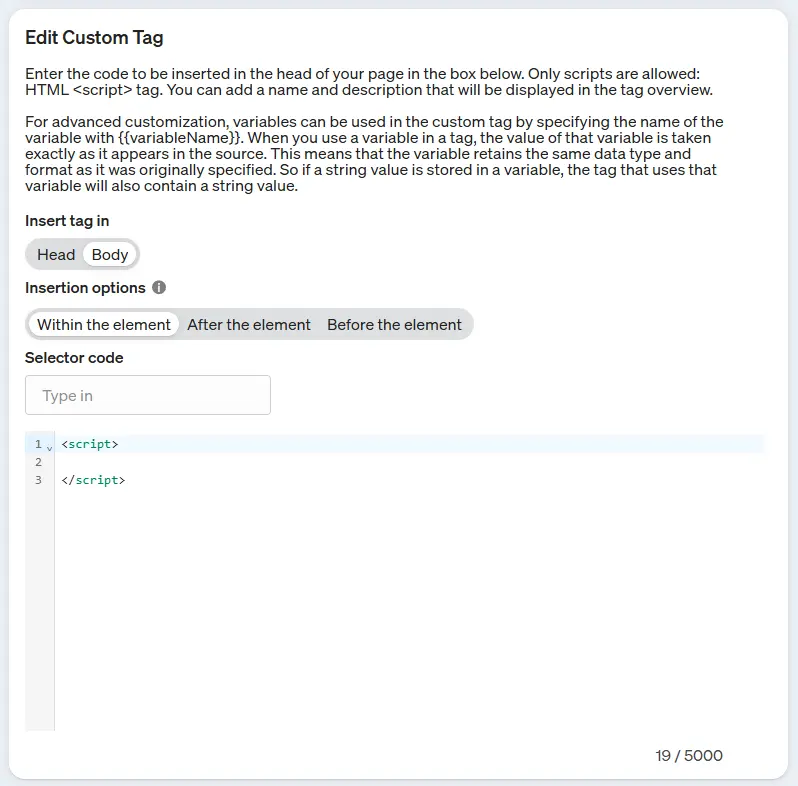
Custom tag now also insertable in the body
Until now, custom tags could only be inserted in the head. This meant that it was not possible to determine where visible elements (e.g. an icon for a chatbot) would be displayed on the website. With the newly created option of also being able to insert a custom tag in the body, the position on the website can be determined:
Placeholder text for the investor’s own provider
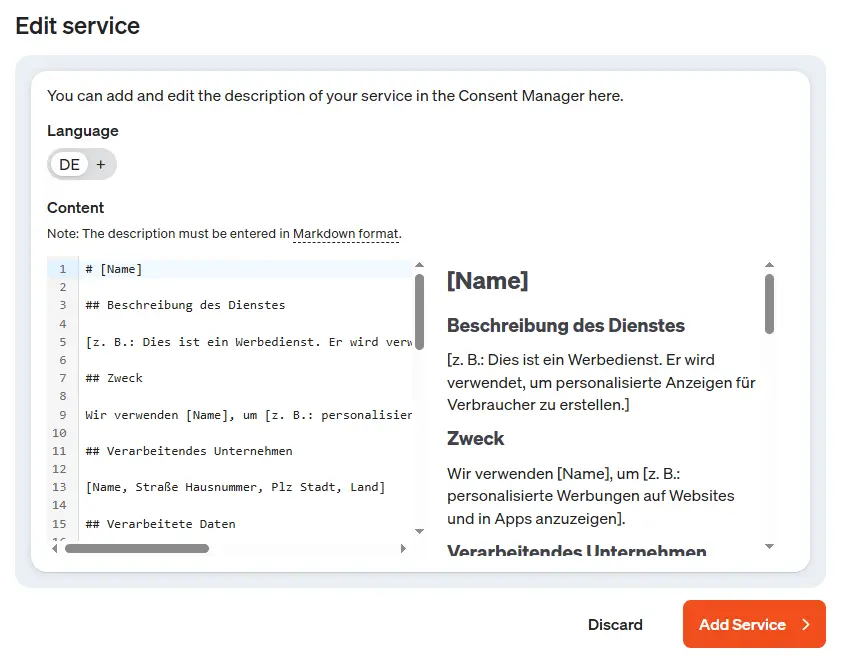
When adding new providers, there is now a placeholder text that contains the correct mark-down and lists the most important information required, which only needs to be entered.
Two new dimensions for improved newsletter tracking
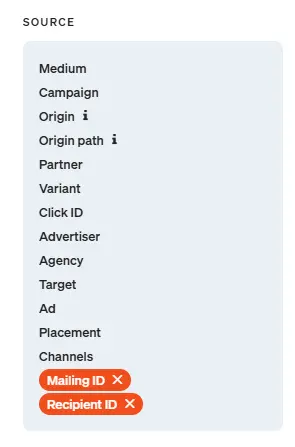
We have added two new dimensions. These dimensions are: etcc_rid (Recipiend ID ) and etcc_mid (Mailing ID). The dimensions can be found under the “Source” group. These dimensions are used to better track newsletters.
Own tracking domain as data attribute in the tracking code
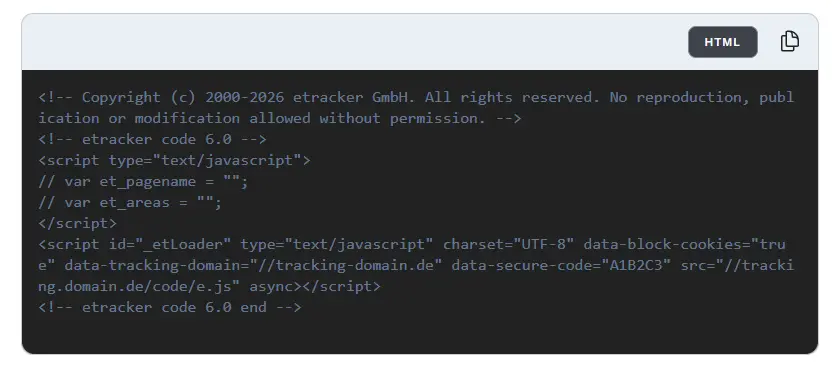
The et_proxy_redirect variable was previously placed in front of the tracking code. This means that you inevitably need a unsafe-inline definition, even if you do not set a page name and do not use the tag manager. We have therefore moved the tracking domain to the data attribute data-tracking-domain in the tracking code. The entered tracking domain no longer needs to be escaped there.
April 14, 2026
New separate report for the Consent Management Analysis
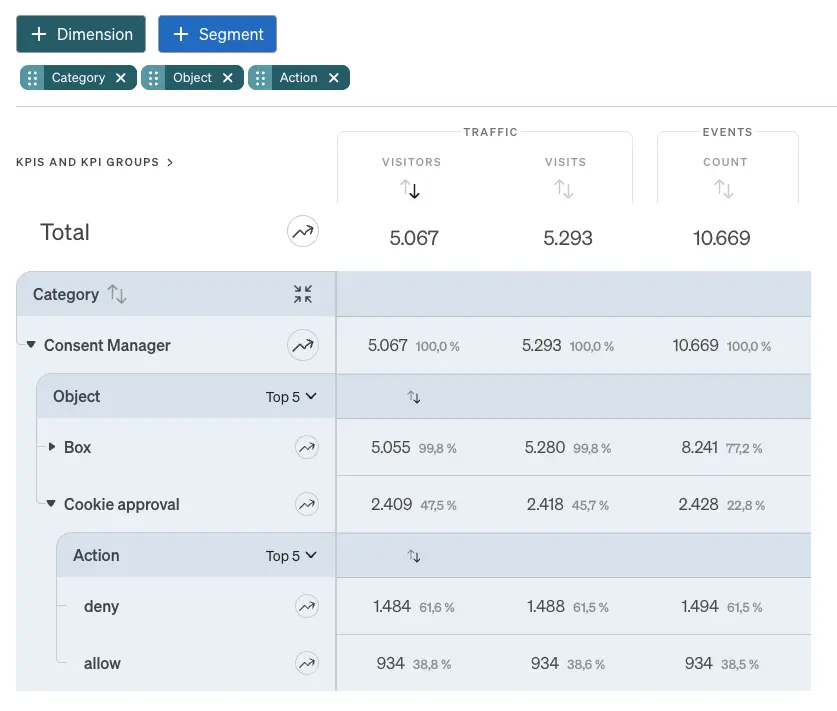
The evaluation of cookie consent has been fundamentally optimized and transferred from the general event statistics to a separate area. Whereas the consent data previously had to be filtered out manually from the “Events” report, a dedicated report is now available for this purpose. This can be accessed via the main menu under “Consent Manager”, which has been expanded to include the new submenu with the items “Configuration” and “Analysis”.
Within the new report, the data can be analyzed using specific dimensions. The category “Consent Manager” is permanently defined. When using the etracker Consent Manager, the type of dialog – differentiated by “Box” and “Banner” – is specified for the objects. The “Cookie consent” object is also included. The decisive values are provided by the underlying actions “allow” and “deny”, which reflect the direct consent or rejection of the user.
In order to be able to interpret the data in the report precisely, it is crucial to differentiate between the key figures:
- Visits: Indicates the number of visits during which the dialog was displayed or an interaction took place.
- Visitors: Shows the number of visitors to whom the dialog has been presented or who have made a selection.
- Events: Reflects the total frequency of events. For example, since every page view is counted for the dialog and users can theoretically interact multiple times, this value represents the sum of all playouts or interactions.
Important for analyzing the consent rate is the fact that only real events are recorded in the report. If a returning visitor calls up the page and is not shown the consent dialog again because their selection has already been saved, this call does not appear in the report. The statistics therefore focus purely on active interactions with the dialog.
Use the new report for the immediate approval rate on display. This is particularly valuable for testing the effect of changes to style, design or texts. To evaluate the long-term overall impact, including all returning visitors, you can continue to access the “Visits/visitors with cookies” key figures in the traffic reports as usual.
This analysis option can be used flexibly: consent rates can also be shown in the new report when using external consent management platforms (CMP), provided that etracker is listed as a provider in the respective platform.
April 7, 2026
Enhanced Conversions
In order to optimize the measurement accuracy of your Google Ads, Meta Ads, TikTok Ads and Pinterest Ads despite the increasing limitations of classic cookie and URL parameter tracking, etracker supports the use of Enhanced Conversions. This function makes it possible to transmit conversion data to advertising platforms not only via the classic click ID (e.g. gclid for Google Ads), but to achieve attribution by transmitting additional information. After implementation, enhanced conversions are taken into account for both tag-based and server-side transmission to the marketing platforms.
Instead of relying solely on technical identifiers, existing customer data such as the e-mail address is included in the conversion event (e.g. after a purchase or registration).
- Pseudonymization: Before the data is transmitted to advertising platforms, etracker converts it locally into a cryptographic hash (SHA256). Plain text data is never transmitted.
- Matching: The advertising provider (e.g. Google) checks internally whether this hash belongs to a user who has previously clicked on an ad.
- Attribution: If a match is found, the conversion is precisely attributed – even without a click ID and across device boundaries.
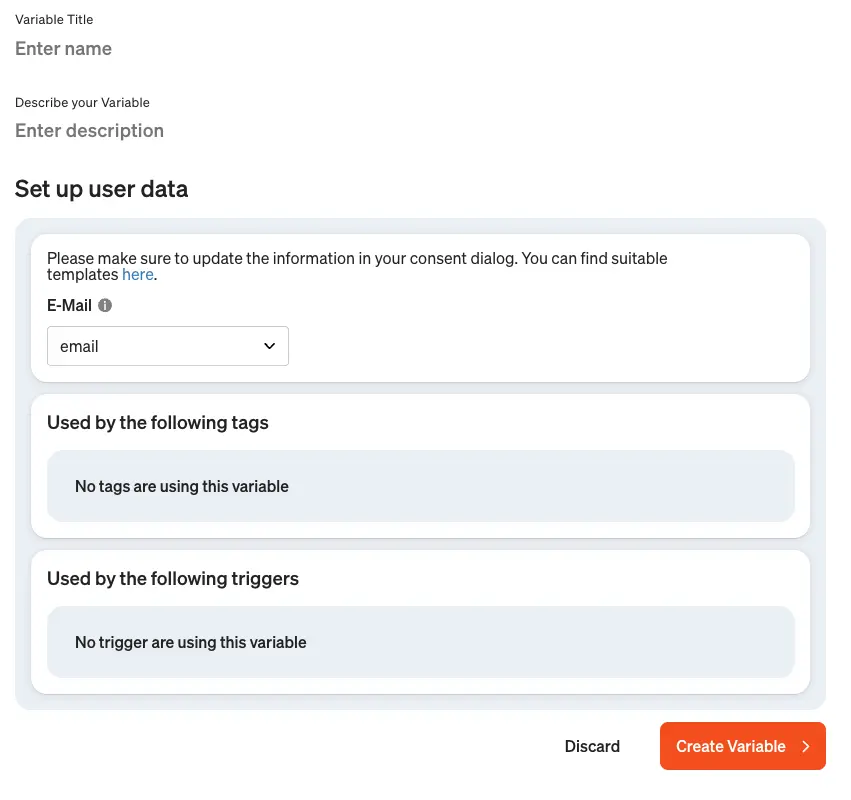
The implementation of Enhanced Conversions is particularly easy and convenient via the etracker tag manager with the help of a variable of the type “Data provided by users”.
Click here for the corresponding documentation